
The Real Dangers of Distracted Driving - Especially Texting Behind the Wheel
Home » The Real Dangers of Distracted Driving—Especially Texting Behind the Wheel
Distracted driving is one of the most serious safety risks on our roads today. The Alabama Department of Transportation reports that cell phone-related crashes are now among the fastest-growing causes of traffic crashes in Alabama. Even more alarming, distracted driving deaths jumped 67.5% in the five years leading up to 2024. Behind that number are real people—families, students, commuting workers, and other everyday drivers. Understanding the risks of distracted driving and learning how to prevent it can help keep everyone safe.
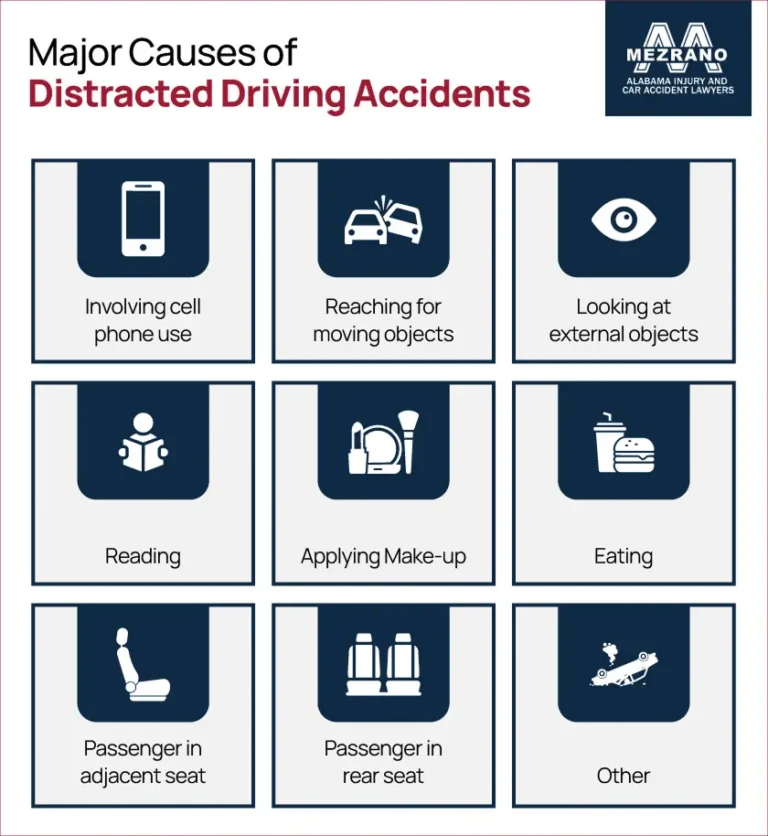
Why Distracted Driving Is A Growing Danger
Distracted driving is rising as smartphone use becomes central to everyday life. Drivers use their phones for work, directions, and staying connected with friends and family. When notifications appear, many feel pressure to respond right away. At the same time, drivers often overestimate their ability to multitask, believing they can safely text or check messages without increasing risk.
On busy roads with growing traffic congestion, even a brief distraction leaves little room for error. Texting is considered one of the most dangerous distractions because it takes a driver’s eyes off the road, hands off the wheel, and mind off driving at the same time. While no age group is immune to these pressures, teenagers are at a higher risk of smartphone addiction compared to other age groups, in part because they generally have less impulse control than adults.
Alarming Distracted Driving Statistics
Distracted driving is not a rare mistake. It is a growing safety issue that affects drivers, passengers, and pedestrians in Alabama and nationwide. Here’s what the data shows:
- In Alabama, nearly 7% of motor vehicle fatalities in 2022 were caused by distracted driving.
- A driver who is texting is 23 times more likely to crash than one who is not.
- Across the United States in 2022, distracted driving crashes resulted in 3,308 deaths and an estimated 289,310 injuries.
- Distraction-related crashes also claimed the lives of 621 pedestrians, bicyclists, and other nonoccupants nationwide in 2022.
These numbers show just how dangerous even a few seconds of distraction can be. Taking steps to stay focused behind the wheel can prevent injuries and save lives.
How Phone Distractions Slow Reaction Time Behind The Wheel
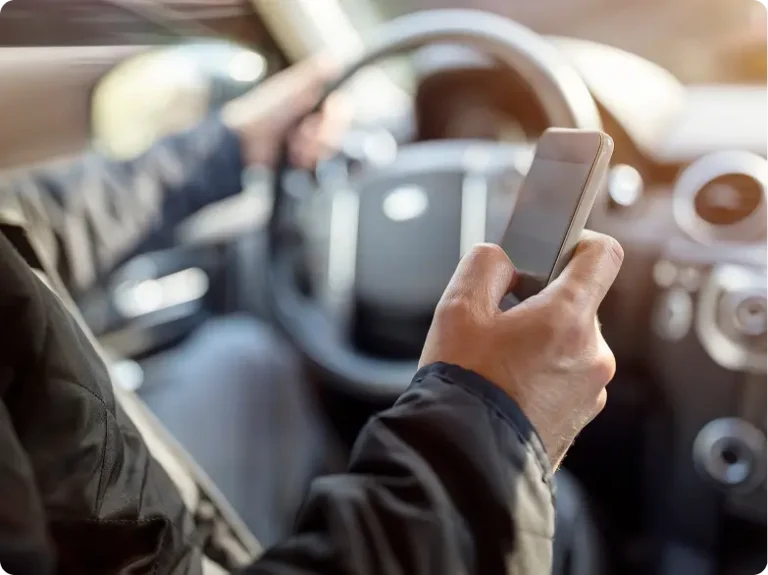
Phone distractions slow reaction time because the human brain cannot effectively focus on two tasks at once, according to the University Medical Center New Orleans. When drivers text, scroll, or check notifications, their brains constantly switch between tasks, delaying the reactions needed to spot hazards and respond safely. Since cars move fast and situations can change instantly, even a small delay can be very risky.
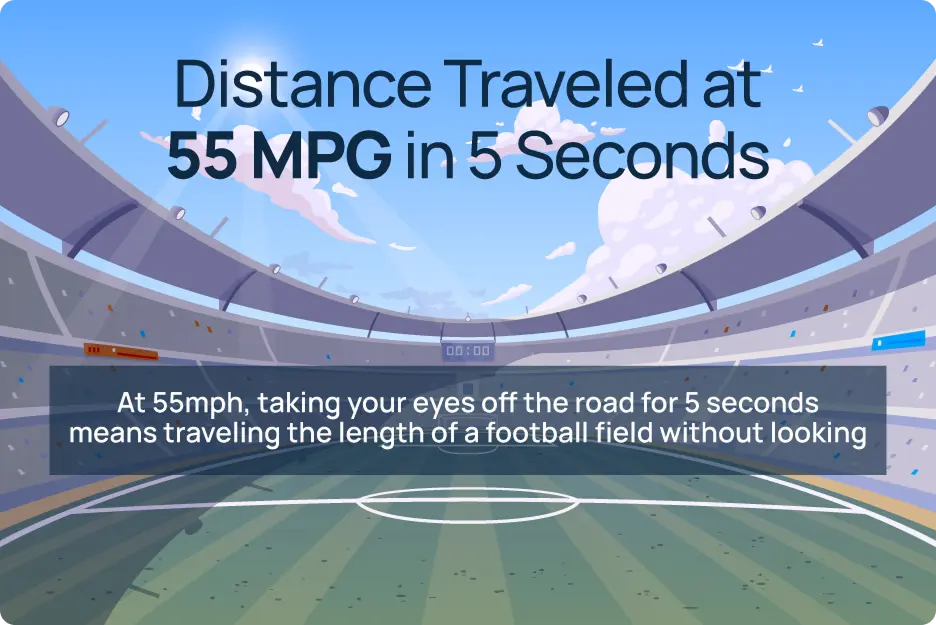
Also, when drivers look at their phones or get distracted, they miss important things happening on the road. The National Highway Safety Administration reports that reading or sending a text message keeps a driver’s eyes off the road for about five seconds, long enough to cover the length of a football field at highway speeds without looking at the road.

The Psychological Side of Distracted Driving
Distracted driving isn’t just about phones, it is also about how our brains respond to them. Even a quick glance at a notification can trigger habits and urges that are hard to resist. Over time, these patterns make it easier to reach for a phone without thinking, even when it’s unsafe:
- Dopamine response from notifications: Alerts and notifications give the brain a small reward of dopamine, a feel-good chemical, making it hard to resist glancing at the phone.
- Habit loops: Drivers can develop automatic routines of checking their devices, often without realizing it.
- Fear of missing out: Many feel pressure to stay up to date on news, social media, and messages immediately.
- “I’ll check for one second” mindset: A quick glance often lasts longer than expected.
- Overconfidence bias: People tend to believe they can safely multitask, even when reaction times and focus are reduced.
The Economic Cost of Distracted Driving
Every time a driver takes their eyes off the road, the consequences go beyond injuries, reaching deep into the wallets of families, workplaces, and communities.
In 2019, motor vehicle accidents in the United States were estimated to cost around $340 billion, with $98 billion attributed to distracted-driving crashes, according to the National Highway Traffic Safety Administration’s National Center for Statistics and Analysis. These costs include medical expenses, lost productivity, property damage, and more. When quality-of-life factors are included, societal harm jumps to $1.37 trillion, with $395 billion linked to distracted driving.
The Cost To Families
Distracted driving can have lasting consequences for families. A single moment of inattention can create financial, emotional, and personal costs that touch every part of daily life:
- Medical expenses, including ER visits and extended hospital care
- Long-term rehabilitation and physical therapy
- Loss of income due to missed work or disability
- Costs to repair or replace vehicles
- Higher insurance premiums following a crash
- The impact of serious injury or the death of a loved one
The Costs To Alabama Communities
Distracted driving reaches beyond the driver, creating costs and disruptions for communities and public services in Alabama:
- First responder and emergency service costs, including firefighters, paramedics, and ambulances
- Court systems and law enforcement resources needed for investigations and prosecutions
- Traffic delays that slow commutes and reduce overall productivity
- Increased strain on the public health care system, including hospitals and clinics
The Cost To Employers and The Economy
Businesses may face disruptions and increased expenses from crashes involving employees:
- Lost productivity from missed work
- Costs associated with workers’ compensation claims
- Increased insurance premiums and liability exposure
- Employee turnover and recruitment after serious injuries
Why These Costs Are Preventable
Texting and other distractions behind the wheel are choices, and most crashes could be prevented by simple behavior changes. Keeping the phone out of reach, ignoring notifications, or using hands-free technology can protect drivers and passengers from physical injuries and spare families the emotional strain of an accident. These small actions also help avoid the financial fallout, including medical bills, lost income, vehicle repairs, and increased insurance costs.
The Role of Parents and Educators
Parents and educators play a critical role in preventing distracted driving among teens and young drivers. By setting expectations, modeling safe habits, and creating structured guidance, they can help teens develop responsible driving behavior:
- Demonstrate safe driving without phone use
- Create family driving contracts with clear expectations
- Support school awareness programs about distracted driving
- Set tech boundaries, including limits on phone use while driving
- Use phone monitoring tools to reinforce safe behavior
- Talk openly about the risks of distracted driving

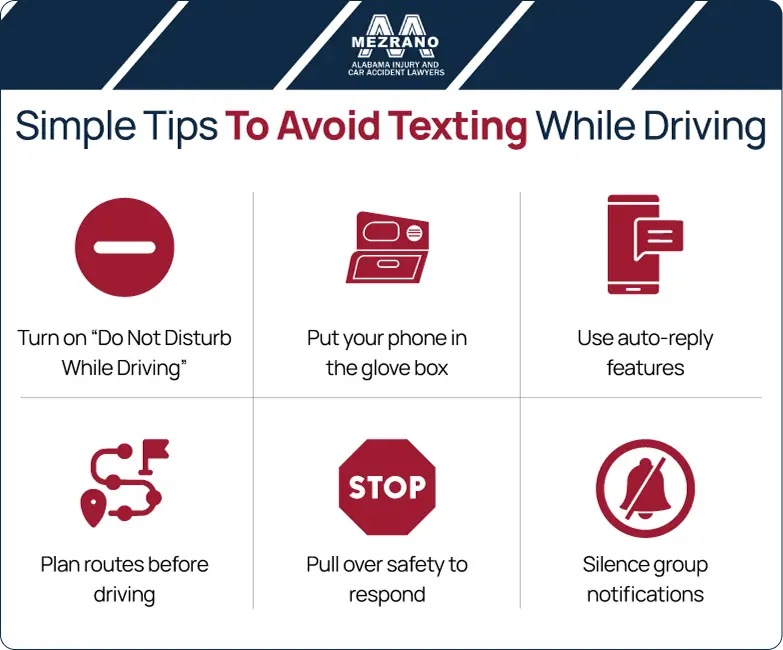
Simple Tips To Avoid Texting While Driving
Avoiding texting while driving doesn’t have to be complicated. By making small changes before and during a drive, you can stay focused on the road and protect yourself and others. Try these tips to stay focused:
- Turn on “Do Not Disturb While Driving”
- Put your phone in the glove box
- Use auto-reply features
- Plan routes before driving
- Pull over safety to respond
- Silence group notifications
Technology That Can Help Prevent Distracted Driving
Drivers today can use a variety of technologies to prevent distractions, including:
- Apple iPhone “Do Not Disturb While Driving”: Silences calls, texts, and notifications while driving to keep attention on the road.
- Android Driving Mode: Limits interruptions, sends auto-replies, and offers simplified navigation.
- Optional third-party apps: Block distractions, track safe driving habits, and encourage responsible phone use.
- Auto-reply messages: Notify contacts automatically that the driver cannot respond while driving.
- Notification silencing: Temporarily mutes alerts from messages, apps, and social media.
- Crash detection features: Detect crashes and alert emergency services automatically for faster assistance.
Texting and Driving Laws In Alabama
Alabama has taken steps to address distracted driving, but its regulations are less strict than those of some other states. The following sections explain what the law says in Alabama and how it compares to rules in other jurisdictions.
What Alabama Law Says
Alabama’s hands-free law generally makes it illegal to hold a phone while driving for any reason, including calling, texting, browsing the internet, or watching videos. Drivers must use hands-free methods, such as Bluetooth, voice commands, or mounted devices. Violating the law can result in a misdemeanor, fines, and points on a driving record. Because distracted driving is considered a secondary offense, officers can only issue a citation if the driver is first stopped for another traffic violation.
The hands-free law, which was enforced beginning in June 2024, was created in memory of three Alabamians who lost their lives in distracted driving accidents: 17-year-old CiCi Lunsford, 22-year-old Leah Grace Tarvin, and 58-year-old Jerry “Jay” Kendall. Fines start at $50 and one point on the driver’s license for a first offense, increase to $100 and two points for a second offense, and rise to $150 and three points for a third violation.
“Distracted driving is one of the fastest-growing safety issues on the roads today. Distracted drivers aren’t just a threat to themselves; they are a danger to everyone else on the road.”
How Alabama Compares To Other States
Although Alabama has strengthened its distracted driving laws, it remains less restrictive than some other states. States like Oregon and California enforce stricter rules with stiffer penalties for violations.
Oregon law broadly restricts the use of mobile electronic devices while driving, including while stopped at a red light or in traffic. Adults may use hands-free technology in limited situations, but drivers under 18 are subject to stricter rules. Narrow exceptions apply, including certain emergency situations. Violations can carry serious penalties, including steep fines.
In California, drivers may not hold and operate a handheld wireless phone or other electronic wireless communications device while driving. A mounted device may be used with a single swipe or tap, and the statutory base fine is $20 for a first offense and $50 for subsequent offenses, though total ticket costs are typically higher after assessments.
Why This Matters To Alabama Families
Distracted driving is a choice, and every crash has consequences that extend beyond the moment of impact, affecting real people and their communities. At Mezrano® Injury Lawyers, we see firsthand the physical, emotional, and financial impact these crashes have on families across Alabama. Many of these crashes could have been prevented with simple, safe driving habits.
If you or a loved one has been injured by a distracted driver, our experienced car accident lawyers are here to help. Contact us online or call 205-537-0112 today for a free consultation and to learn about your legal options.